Physical AI in Japan: The Sector, the Boom, and the Regulatory Landscape
Physical AI, AI that perceives and acts in the physical world through robots, autonomous vehicles, drones, and humanoids, is commercializing fast in Japan, pushed by an acute labor shortage and a robotics heritage. There is no single physical-AI law: an innovation-first AI framework sits over a patchwork of sector rules for autonomous driving, drones, and delivery robots. A map of the sector and how it is regulated.
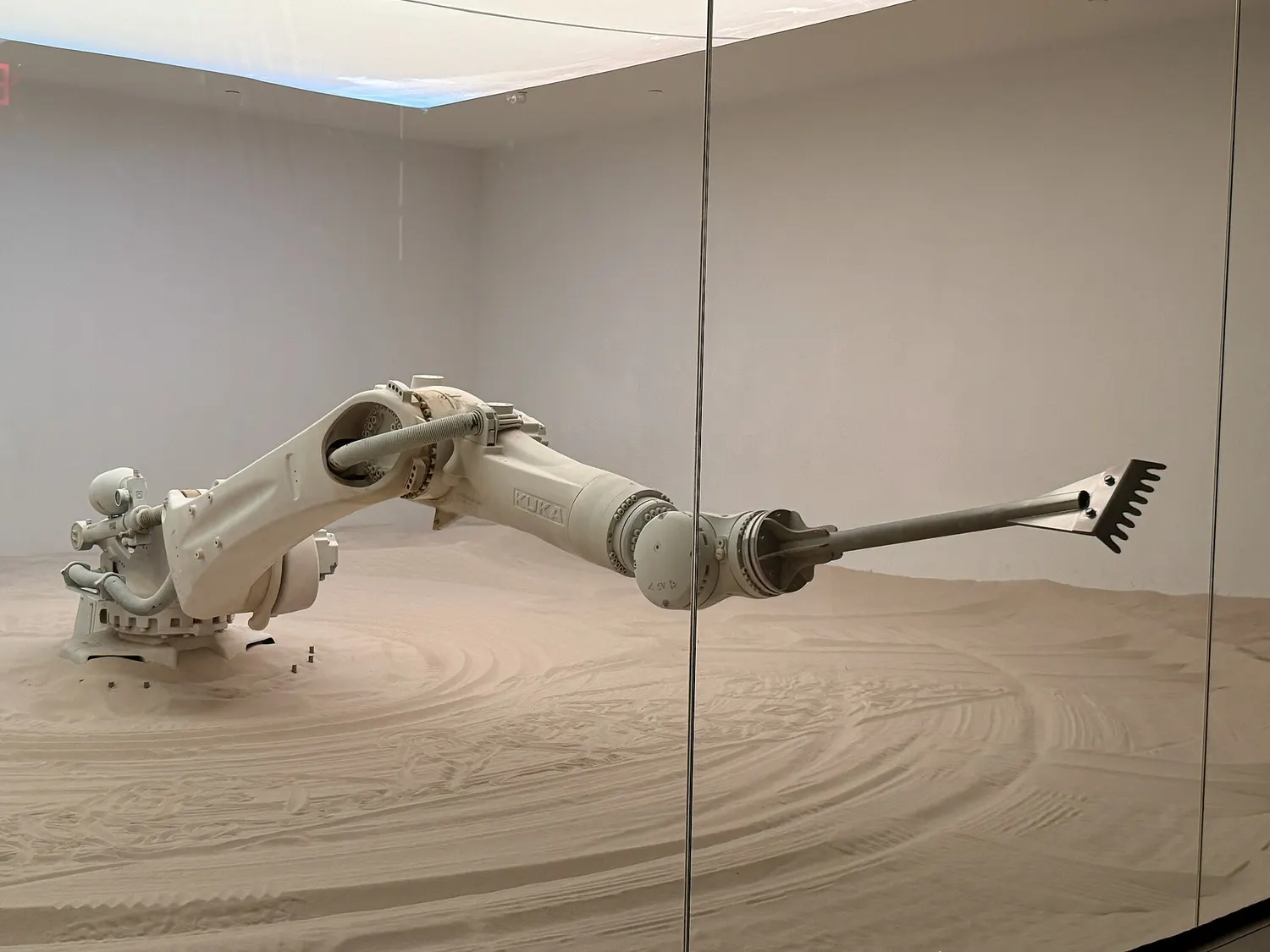
Physical AI, artificial intelligence that perceives and acts in the physical world rather than generating words and images on a screen, is moving from concept to commercialization, and Japan is one of the places it is moving fastest. Humanoid robots are being trialed at Haneda Airport, autonomous-vehicle fleets are collecting data on Japanese roads, and the government has made “physical AI” part of how it talks about the country’s industrial future. Behind the momentum sits a structural fact no other advanced economy faces as acutely: Japan’s shrinking, aging workforce makes automation not an option but a necessity.
For robotics companies, autonomous-systems developers, and the investors behind them, Japan is an unusually favorable market with an unusually specific regulatory reality. There is no single “physical AI law.” An innovation-first AI framework sits over a patchwork of sector rules, each governing the domain a machine operates in. This is a map of the sector, why Japan matters, and how it is actually regulated.
What physical AI is, and why Japan
Physical AI spans autonomous vehicles, drones, delivery robots, humanoid robots, and the AI-driven manipulators used in factories and warehouses. The common thread is that these systems take actions within the physical world, which can result in physical harm. This is what separates them from the generative AI that produces content on a screen, and firmly places physical AI in the realm of existing product safety and sectoral regimes.
Japan’s fit with this sector is structural and strong. It has a robotics heritage few countries can match, in industrial-robot leaders such as FANUC and Yaskawa. It has a government that has declared its ambition to become the most AI-friendly country in the world. And it has the demographic pressure that turns automation from a productivity nicety into an economic imperative: an aging, shrinking population and a labor shortage biting across logistics, construction, elderly care, and agriculture. Where other countries debate whether to let robots do the work, Japan increasingly needs them to.
The commercialization is visible. Japan Airlines’ ground-service arm is deploying humanoid robots at Haneda; autonomous-vehicle developers are running Japanese road trials; and analysts project the domestic physical-AI market to grow many times over within the decade. The compute that all of this depends on connects the sector directly to Japan’s data center and semiconductor build-out, which is being pushed for exactly this reason.
Physical AI in the Japan Growth Strategy
Japan’s political leaders have placed physical AI at the heart of Japan’s AI priorities. The Japan Growth Strategy 2026 (日本成長戦略), released by the Cabinet Secretariat’s Growth Strategy Council on 30 June 2026, identifies 17 strategic sectors and 62 key technologies for public and private investment, with over ¥370 trillion in anticipated cumulative investment by FY2040. Physical AI sits at the top of that list: “Physical AI (especially AI robots)” is the first technology named in the first sector, AI & Semiconductors, alongside the semiconductors that power physical intelligent systems and domain-specific “vertical” AI. The strategy treats AI transformation (AX), and physical AI capability in particular, as Japan’s cross-sector competitive edge.
Physical AI also runs through many of the other sectors as the enabling technology. Autonomous driving sits in Digital & Cybersecurity; unmanned aerial vehicles and flying cars in Aviation & Space; small unmanned aircraft and vessels in the Defense Industry; ocean drones in Ocean; medicine using AI and robotic devices in Pharmaceuticals & Advanced Medicine; automated cargo handling and next-generation warehousing in Port Logistics; and food machinery in Foodtech. For a robotics or autonomous-systems company, that means government support, procurement, and regulatory attention are likely to reach it through several sectors at once, not just one.
Funding is being allocated (and sought) to make these strategic directions a reality. Priority sectors are funded through the new “Strong & Prosperous Japan” investment framework, which allows multi-year support outside single-year budget caps. In its FY2027 budget request, METI put ¥896 billion toward multimodal foundation-model development aimed at physical AI, the single largest line in its entire request, plus ¥321 billion for a new AI robotics strategy program and ¥133 billion for new AI-robotics core hubs. Our breakdowns of the Japan Growth Strategy’s 17 sectors and METI’s FY2027 budget request cover both in detail.
The governance layer: an innovation-first AI law
Over the whole field sits Japan’s first AI-specific statute, the AI Promotion Act (人工知能関連技術の研究開発及び活用の推進に関する法律), enacted on 28 May 2025 and fully in force from September 2025. It matters as much for what it does not do as for what it does.
The Act is innovation-forward and light-touch. It sets out basic policies and principles, establishes an AI Strategy Headquarters and a Cabinet-approved Basic AI Plan, and promotes research, development, and adoption. What it deliberately omits is the prohibition-and-penalty machinery of the EU AI Act: it imposes no monetary penalties and creates no detailed catalogue of banned uses. The Act reflects Japan’s bet that agile, soft-law governance, rather than up-front prohibition, will make it the easiest country in the world to develop and use AI.
For physical AI, the practical implication is clear. The AI Promotion Act is the umbrella, not the operating manual. The rules that actually decide whether a driverless vehicle can run, a drone can fly over a town, or a robot can work on a public sidewalk are found not in the AI law but in the sector-specific statutes governing each domain.
The regulatory patchwork: rules by domain
Physical AI in Japan is regulated by where and how the machine operates. Three domains carry most of the weight, and Japan has, notably, already built working legal paths in each.
- Autonomous vehicles. A 2022 amendment to the Road Traffic Act created a permit system for Level 4 operation without a driver (特定自動運行), in force since 1 April 2023. Permits are issued route by route by prefectural public safety commissions, and the operator must station a remote monitor in place of a driver. The vehicle itself must first be granted operating conditions by MLIT under the Road Transport Vehicle Act, the same mechanism that legalized Level 3 in 2020. Japan was among the first countries to give driverless vehicles a workable legal route, and deployment is growing one route at a time.
- Drones. Since 5 December 2022, the Civil Aeronautics Act has permitted Level 4 flight, beyond-visual-line-of-sight operation over populated areas, which had been off-limits. It requires airworthiness certification of the aircraft (機体認証), a national pilot skill certification (無人航空機操縦者技能証明), and operational compliance, all under the transport ministry. This opened drone delivery and inspection in and around towns.
- Delivery robots. The same 2022 Road Traffic Act amendment created a category for remote-operated small vehicles (遠隔操作型小型車), the delivery robots now being trialed on sidewalks, addressing the same labor shortage that is straining last-mile logistics.
Beyond these, industrial and service robots have no single dedicated law. They are governed by workplace safety rules under the Industrial Safety and Health Act, by product-safety and product-liability law, and by technical standards. Care robots have their own support and evaluation ecosystem through METI, MHLW, and public research bodies. And underneath all of it, physical AI depends on compute, tying the sector to Japan’s data center and semiconductor policy.
What is still being written
The striking thing about Japan’s physical-AI regulation is that the frameworks exist, which is not true everywhere, but they are early, and the operating detail is expanding continuously.
The areas and conditions for Level 4 driving are widening case by case. The drone operating envelope keeps growing. Liability rules, who answers when an autonomous system causes harm, are being adapted from existing regimes rather than settled in one place, and differ between a car, a robot, and a drone. Safety certification and standards are evolving as the machines become more capable. And, as with data centers, local and community acceptance is becoming a factor in where autonomous systems can actually operate. The regulation is not finished; it is being written in step with the technology.
Where this becomes a public affairs question
Physical AI is an unusually clear case of a sector where the government’s ambition and the industry’s interest point the same way, which changes the nature of the engagement.
Japan wants to lead in physical AI, and it has said so and legislated for it. That makes the government genuinely open to industry input on how the expanding rules should be drawn, the areas Level 4 driving should cover next, the conditions for drone corridors, the standards for humanoid and service robots, the way liability is allocated. These are being decided now, in ministries and expert committees, and the innovation-first posture means the door is open in a way it is not in more precautionary jurisdictions. For a physical-AI company, the opportunity is not just to comply with the rules but to help shape the ones still being written, while the frameworks are young and the government is actively looking for the sector’s view.
If your physical-AI business depends on how Japan’s rules expand, get in touch.
How to plan for it
- Match the product to the domain regime. Physical AI is regulated by where it operates. An autonomous vehicle, a drone, and a sidewalk robot answer to different laws and different ministries. Identify yours first.
- Use the innovation-first posture, but read the sector law. The AI Promotion Act is permissive, but the binding rules are in the Road Traffic Act, the Civil Aeronautics Act, and the sector standards. Do not mistake the umbrella for the operating manual.
- Plan around the expansion, not just the current envelope. Level 4 areas, drone corridors, and standards are widening. Where the envelope is going matters as much as where it is.
- Secure the compute story. Physical AI needs compute, and compute in Japan means power, data centers, and the policy around them. The two sectors are linked.
- Engage while the rules are young. Japan wants the sector’s input and is writing the detail now. This is the moment to shape it, not after it sets.
Why this matters for public affairs in Japan
Physical AI concentrates several of Japan’s defining conditions in one sector: a robotics tradition, a labor shortage that makes automation urgent, an explicit national ambition to lead in AI, and a permissive governance philosophy laid over a patchwork of sector rules that are still being drawn. That combination makes Japan one of the most promising markets in the world for robots and autonomous systems, and one where the regulatory frontier is unusually open to those who engage it. The companies that win here will be the ones that understand physical AI is not governed by an AI law but by the laws of the road, the sky, and the workplace, and that treat the expanding rules as something to help shape rather than simply wait for.
Gemini Group advises robotics, autonomous-systems, and AI companies on Japan’s regulatory and policy environment, from the AI Promotion Act to the sector rules for vehicles, drones, and robots, and on engaging the ministries writing them. Contact us to discuss your Japan physical-AI strategy.
Further reading: our overview of how Japan is regulating AI covers the governance side, and our piece on data centers in Japan covers the compute and power the sector runs on.
Frequently asked questions
- What is physical AI?
- Physical AI is artificial intelligence that perceives and acts in the physical world, rather than only generating text or images on a screen. It covers autonomous vehicles, drones, delivery robots, humanoid robots, and the AI-driven manipulators used in manufacturing and logistics. Where generative AI produces content, physical AI takes actions with real-world consequences, which is why it is regulated not as software but through the laws that govern the domain it operates in: roads, airspace, factories, and public space.
- How is AI regulated in Japan?
- Lightly, and by design. Japan's AI Promotion Act, enacted in May 2025 and fully in force from September 2025, is the country's first AI-specific law, but it is an innovation-first framework: it sets basic policies and principles, establishes an AI Strategy Headquarters and a Basic AI Plan, and imposes no monetary penalties, in deliberate contrast to the prohibition-heavy EU AI Act. Japan's stated ambition is to be the most AI-friendly country in the world. For physical AI, this means the governance law is permissive, and the binding rules live in the sector-specific laws for vehicles, aircraft, and public-road use.
- Is Japan a good place for physical AI and robotics?
- Structurally, few places are better suited. Japan has a deep robotics heritage in companies like FANUC and Yaskawa, a government aiming to be the most AI-friendly country in the world, and, above all, an acute and worsening labor shortage from an aging, shrinking population that makes automation an economic necessity rather than a choice. Sectors from logistics and construction to elderly care and agriculture are actively pulling in robots and autonomous systems. The demand side is exceptionally strong; the constraints are power, compute, and the evolving sector rules.
- How are autonomous vehicles regulated in Japan?
- Under the Road Traffic Act and the Road Transport Vehicle Act. A 2022 amendment to the Road Traffic Act created a permit system for Level 4 autonomous driving (特定自動運行), driverless operation under specified conditions, which took effect on 1 April 2023, with permits granted by prefectural public safety commissions. The vehicle itself must also meet safety standards under the Road Transport Vehicle Act. The same 2022 reform legalized remote-controlled delivery robots (遠隔操作型小型車) on public roads and sidewalks. Japan has a working legal path for driverless vehicles and delivery robots, expanding area by area.
- How are drones regulated in Japan?
- Under the Civil Aeronautics Act. Since 5 December 2022, Japan has permitted Level 4 drone flight, beyond-visual-line-of-sight operation over populated areas, previously prohibited. Level 4 requires airworthiness certification of the aircraft (機体認証), a national pilot skill certification (無人航空機操縦者技能証明), and compliance with operational rules, all administered by the Ministry of Land, Infrastructure, Transport and Tourism. It opened the way for drone delivery, inspection, and other commercial operations in and around towns, and the operating envelope continues to widen.
- Who is liable when an autonomous system causes harm in Japan?
- It depends on the machine and the victim. Japan has adapted existing laws rather than writing a new one. For self-driving cars, for example, the Automobile Liability Security Act (自動車損害賠償保障法) makes the company or owner running the vehicle liable almost automatically, backed by compulsory insurance, and insurers can then go after the manufacturer. The government says this holds through Level 4. Japan's approach has been to adapt existing liability regimes to each category of physical AI rather than to create a single new one, which means the answer differs between an autonomous car, a delivery robot, and an industrial robot. As deployment scales, how liability is allocated is one of the live questions the rules are still resolving.