Financial Services Agency Japan (JFSA): Role and Powers
Japan's Financial Services Agency (金融庁, JFSA) supervises banks, insurers, securities firms, and registered crypto exchanges. What it licenses, how it differs from the UK body of the same acronym, and what foreign financial firms should expect.
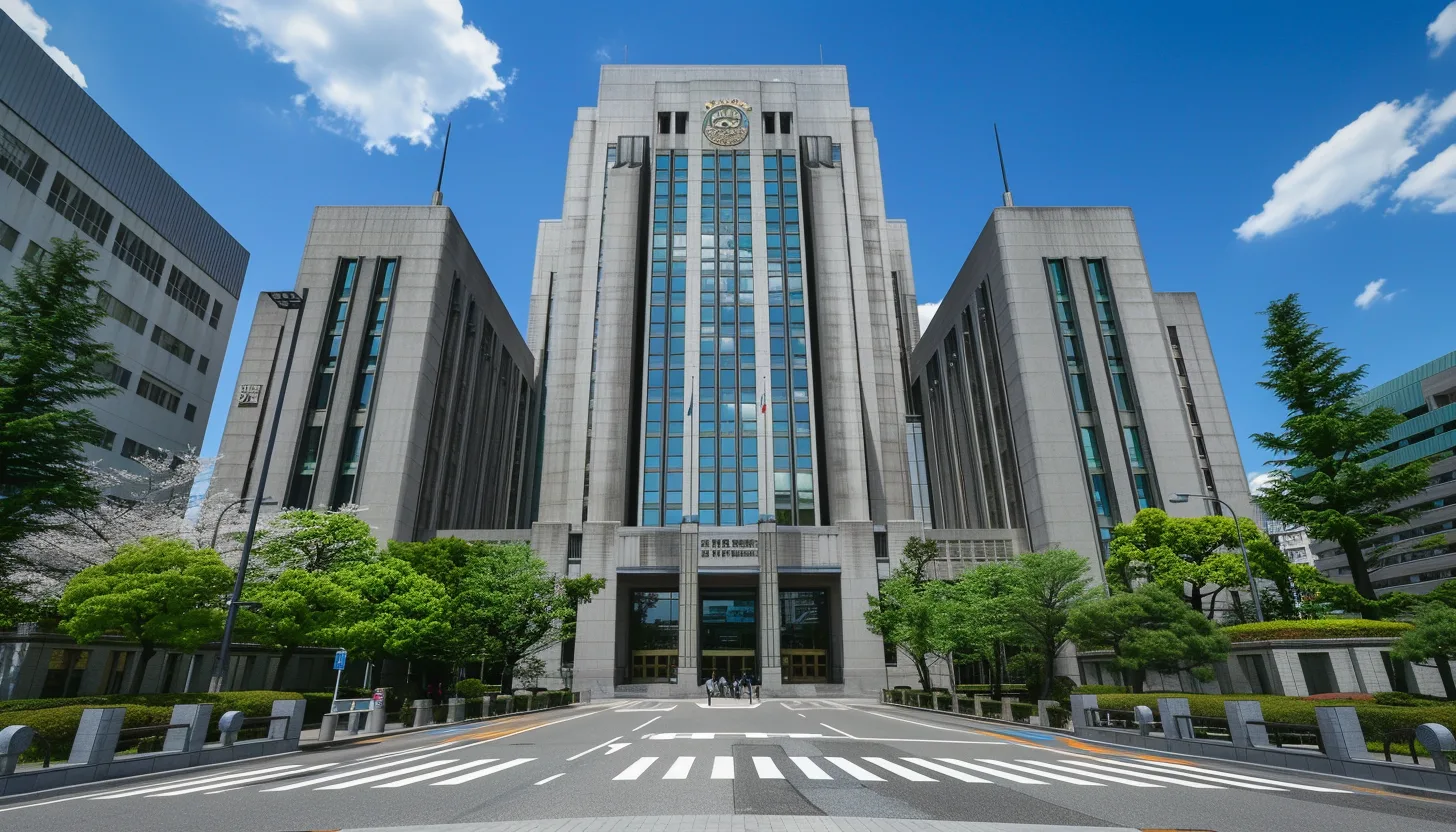
Japan’s Financial Services Agency (金融庁), usually written JFSA, is the country’s integrated financial regulator. It supervises banks, insurers, securities firms, asset managers and registered crypto asset exchange service providers, and it holds the licensing power that determines who may conduct financial business in Japan at all.
A note on the acronym, because it trips people up constantly. Japan’s FSA is a financial regulator. The UK’s Financial Services Authority was abolished in 2013 and replaced by the FCA and PRA, and today the UK’s FSA is the Food Standards Agency. JFSA is the safer usage in any document that crosses jurisdictions.
The agency took its present form in 2000, succeeding the Financial Supervisory Agency established in 1998. Both grew out of the banking crisis of the late 1990s, which discredited an arrangement under which the Ministry of Finance simultaneously set financial policy and supervised the institutions it regulated. Separating the two was the point.
For any global bank, asset manager, insurer, fintech, or crypto platform serving Japanese clients, the FSA is the regulator that defines the perimeter of the business. Its supervisory approach, licensing posture, and cross-border coordination determine how quickly new products reach the market and how exposed firms are to enforcement. Against a backdrop of Japan as a Leading Asset Management Center reforms, aggressive crypto and stablecoin rule-making, and an intensifying focus on cybersecurity and operational resilience, understanding the FSA is now a core element of any financial-sector public affairs strategy in Japan.
The FSA at a glance
The Financial Services Agency was established in 2000 as a reorganization of the former Financial Supervisory Agency and is Japan’s integrated financial regulator. It is formally an external agency of the Cabinet Office and operates in close coordination with the Bank of Japan (BOJ) on macro-financial stability and with the Ministry of Finance (MOF) on broader financial policy, tax, and international financial diplomacy.
Mandate and legal basis
The FSA’s mandate covers the stability of the financial system, protection of depositors, policyholders, and investors, and the smooth functioning of markets. It is the lead regulator under a wide range of statutes, including the Banking Act, the Financial Instruments and Exchange Act (FIEA), the Insurance Business Act, the Payment Services Act, and the Act on Prevention of Transfer of Criminal Proceeds. The Securities and Exchange Surveillance Commission (SESC) operates under the FSA and handles market surveillance and inspections.
Structure and leadership
The FSA is headed by a Commissioner, supported by a Deputy Commissioner for International Affairs and multiple senior officials. Its core operating units include the Strategy Development and Management Bureau, the Policy and Markets Bureau, and the Supervision Bureau, along with an inspection function and the SESC. A Minister of State for Financial Services sits at the political level and is a central actor in any high-profile financial policy debate.
Key policy priorities in 2026
Asset management and capital market reform
The Kishida-era Asset Management Nation initiative, extended into the Takaichi administration, aims to position Tokyo as a globally competitive asset management center. Current FSA priorities include expanding the NISA tax-advantaged investment program, promoting higher-quality asset management practices, reducing barriers for new entrants, and encouraging foreign asset managers to set up or expand in Japan. For global firms, this creates meaningful openings on licensing, talent, and product distribution, if approached with the right local posture.
Corporate governance and stewardship
The FSA, working with the Tokyo Stock Exchange, continues to push forward the Corporate Governance Code and the Stewardship Code. Current focus areas include board effectiveness, capital efficiency (including responses to the TSE’s price-to-book ratio initiative), climate-related disclosures, and independent director practices. These reforms directly shape how foreign investors engage with Japanese issuers and how overseas-listed Japanese subsidiaries are structured.
Crypto assets, stablecoins, and Web3
Japan remains one of the most structured jurisdictions globally for crypto assets, stablecoins, and Web3 under the Payment Services Act and the FIEA. The FSA licenses crypto asset exchange service providers, oversees issuers and intermediaries of stablecoins, and is actively refining the boundary between security tokens, utility tokens, and NFTs. Global exchanges, custodians, and token issuers should expect ongoing dialogue on investor protection, segregation of customer assets, and anti-money-laundering controls.
Sustainable finance and climate disclosure
The FSA is a central actor in Japan’s sustainable finance agenda, including the rollout of sustainability disclosure standards aligned with ISSB, transition-finance frameworks, and supervision of ESG-labeled investment products. This creates both compliance obligations and opportunities for firms positioning products around transition, green, or transition-linked finance.
Cybersecurity and operational resilience
Following a series of high-profile incidents affecting financial institutions and third-party providers, cybersecurity, third-party risk, and operational resilience are now top supervisory themes. The FSA’s guidelines on IT governance and cyber resilience apply across banks, securities firms, insurers, and payment-service providers, with rising expectations on tabletop exercises, incident reporting, and board-level oversight.
Anti-money-laundering and FATF alignment
The FSA leads Japan’s response to FATF evaluations, and has tightened expectations on customer due diligence, transaction monitoring, sanctions screening, and governance of AML functions. Foreign banks and fintechs operating through Japanese branches or subsidiaries are a clear focus of enhanced supervision.
How the FSA interacts with other parts of the Japanese government
The FSA works closely with the Bank of Japan on systemic stability, stress testing, and emergency liquidity arrangements, and with the Ministry of Finance on international financial policy, crisis management, and tax matters affecting financial products. It coordinates with the Japan Fair Trade Commission (JFTC) on competition issues in payments and financial platforms, with the Consumer Affairs Agency (CAA) on retail consumer finance, with the Personal Information Protection Commission (PPC) on data governance, and with the National Tax Agency on tax-related disclosures and NISA operation.
Internationally, the FSA is deeply embedded in the Financial Stability Board (FSB), the Basel Committee on Banking Supervision, IOSCO, and the IAIS. For foreign firms, this matters because much of what lands in Japanese rulebooks is shaped by positions the FSA has taken internationally.
What this means for financial firms operating in Japan
Licensing and market entry
For banks, asset managers, insurers, and fintechs, FSA licensing is highly document-intensive and relies heavily on face-to-face dialogue. Success typically requires early pre-application engagement, credible local leadership, Japanese-language documentation, and a clear narrative on governance and risk management, not just a strong global track record.
Supervisory relationship management
Once licensed, firms should treat the FSA relationship as a continuous workstream. That means regular dialogue, proactive briefings on major product and governance changes, and disciplined responses to questionnaires and inspection findings. The FSA’s use of Early Warning and Integrated Monitoring frameworks means that issues can escalate quickly if not handled carefully.
Product and business model design
Product structuring for Japan, from structured notes and ETFs to crypto products, stablecoins, and insurance riders, needs to be calibrated to FSA practice rather than retrofitted. Early engagement on suitability, disclosure, and investor-protection expectations reduces both time-to-market and the risk of late-stage redesign.
Cross-border coordination
For global groups, alignment between headquarters and the FSA-facing Japanese entity is critical. The FSA will often test whether the Japanese operation has genuine authority, proper resourcing, and meaningful local risk oversight, particularly for crypto, AML, and cyber files.
What the published figures show about FSA supervision
Japan publishes the standard processing period, legal basis and annual volume of each administrative procedure. Set the entry procedures against the supervisory ones and the shape of the regime is clear:
| Procedure | Legal basis | Standard period | Filings/year |
|---|---|---|---|
| Financial instruments business registration | FIEA Art. 29-2(1) | 2 months | ~48 |
| Reporting demands and on-site inspections | FIEA Art. 56-2 | not published | ~10,351 |
| Confirmation statement filing | FIEA Art. 24-4-2(1) | 2 days | ~16,921 |
| Extraordinary report filing | FIEA Art. 24-5(4) | 2 days | ~12,289 |
| Amended large-shareholding report | FIEA Art. 27-25(1) | 2 days | ~10,453 |
| Crypto exchange change notification, prior | Payment Services Act Art. 63-6(1) | 1 month | ~97 |
Roughly 48 registrations a year against roughly 10,351 reporting demands and inspections. That ratio is the most useful single fact about the FSA for a foreign firm: authorisation is a narrow gate that few pass, and what follows is not a lighter-touch steady state but continuous supervision. Firms that budget heavily for the licensing project and thinly for the years after it have the balance backwards.
The crypto figures also give a sense of scale: the registered population is small enough that prior-notification filings for changes run at around 97 a year, which is a market where the regulator knows every participant by name.
Why this matters for public affairs in Japan
The FSA is not just a supervisor; it is also a policy entrepreneur that actively shapes how Japan competes as a financial center. For foreign financial firms, constructive public affairs, government relations, and public policy engagement with the FSA, the MOF, and related actors is a direct contributor to commercial outcomes, from licensing timelines to product approvals to the ability to participate in flagship reform programs.
Gemini Group K.K. advises foreign financial institutions, fintech platforms, asset managers, and crypto firms on FSA engagement, financial regulatory strategy, and capital-market policy developments in Japan. Contact us to discuss how these priorities affect your Japan business.
For the wider policy environment this agency sits in, see our sector page on financial services and fintech policy in Japan.
Frequently asked questions
- What is Japan's Financial Services Agency?
- The Financial Services Agency (金融庁), commonly abbreviated JFSA, is Japan's integrated financial regulator. It supervises banks, insurers, securities firms, asset managers and registered crypto asset exchange service providers, writes the rules they operate under, conducts inspections, and grants or withdraws the licences and registrations that permit financial business in Japan.
- Is the Japanese FSA the same as the UK FSA?
- No, and the acronym causes regular confusion. Japan's FSA is the 金融庁, its financial regulator, and is often written JFSA to disambiguate. The UK's Financial Services Authority was a separate body that was abolished in 2013 and replaced by the FCA and PRA, and the UK's current FSA is the Food Standards Agency, which is unrelated to finance entirely.
- When was the Japanese FSA established?
- In its current form in 2000, succeeding the Financial Supervisory Agency created in 1998. Both were products of the banking crisis of the late 1990s, which discredited the previous arrangement under which the Ministry of Finance both set financial policy and supervised the institutions it was regulating. Separating supervision from the MOF was the central reform.
- Does the FSA regulate crypto exchanges in Japan?
- Yes. Crypto asset exchange service providers must register with the FSA under the Payment Services Act, and the agency maintains a public list of registered providers. Japan built this regime earlier than most jurisdictions, following the Mt. Gox and Coincheck incidents, and it imposes requirements on segregation of customer assets, cold storage and internal controls. Operating an exchange for Japanese customers without registration is not permitted.
- Who does the FSA report to?
- It sits under the Cabinet Office, headed by a Commissioner, with a Minister for Financial Services in Cabinet holding political responsibility. In practice it also coordinates closely with the Bank of Japan on financial stability, though the BOJ is a separate institution with its own mandate for monetary policy.
- How long does FSA registration take, and how many firms get registered?
- The published standard processing period for a financial instruments business registration under Article 29-2(1) of FIEA is two months, with no fee. The more revealing number is the volume: roughly 48 registration applications are processed a year. Entry into Japan's regulated financial sector is genuinely rare, which is part of why the pre-filing consultation phase carries so much weight relative to the formal review.
- How actively does the FSA supervise firms once they are registered?
- Continuously, and at a scale that surprises firms accustomed to lighter-touch regimes. Reporting demands and on-site inspections under Article 56-2 of FIEA run to roughly 10,351 a year, against those 48 registrations. Ongoing disclosure obligations add to that: about 16,921 confirmation statements, 12,289 extraordinary reports and 10,453 amended large-shareholding reports are filed annually, most with a two-day processing standard. The regulatory burden in Japan sits after authorisation, not before it.