Importing into Japan: Customs, Tariffs, and Clearance Explained
Bringing goods into Japan means a customs declaration, import permission, and three kinds of charge, but the step that catches importers is the other-law rule: customs will not release goods until every sector permit is shown. A map of declaration and duty, how tariff rates and preferential origin work, and why clearance so often turns on a permit from another ministry entirely.
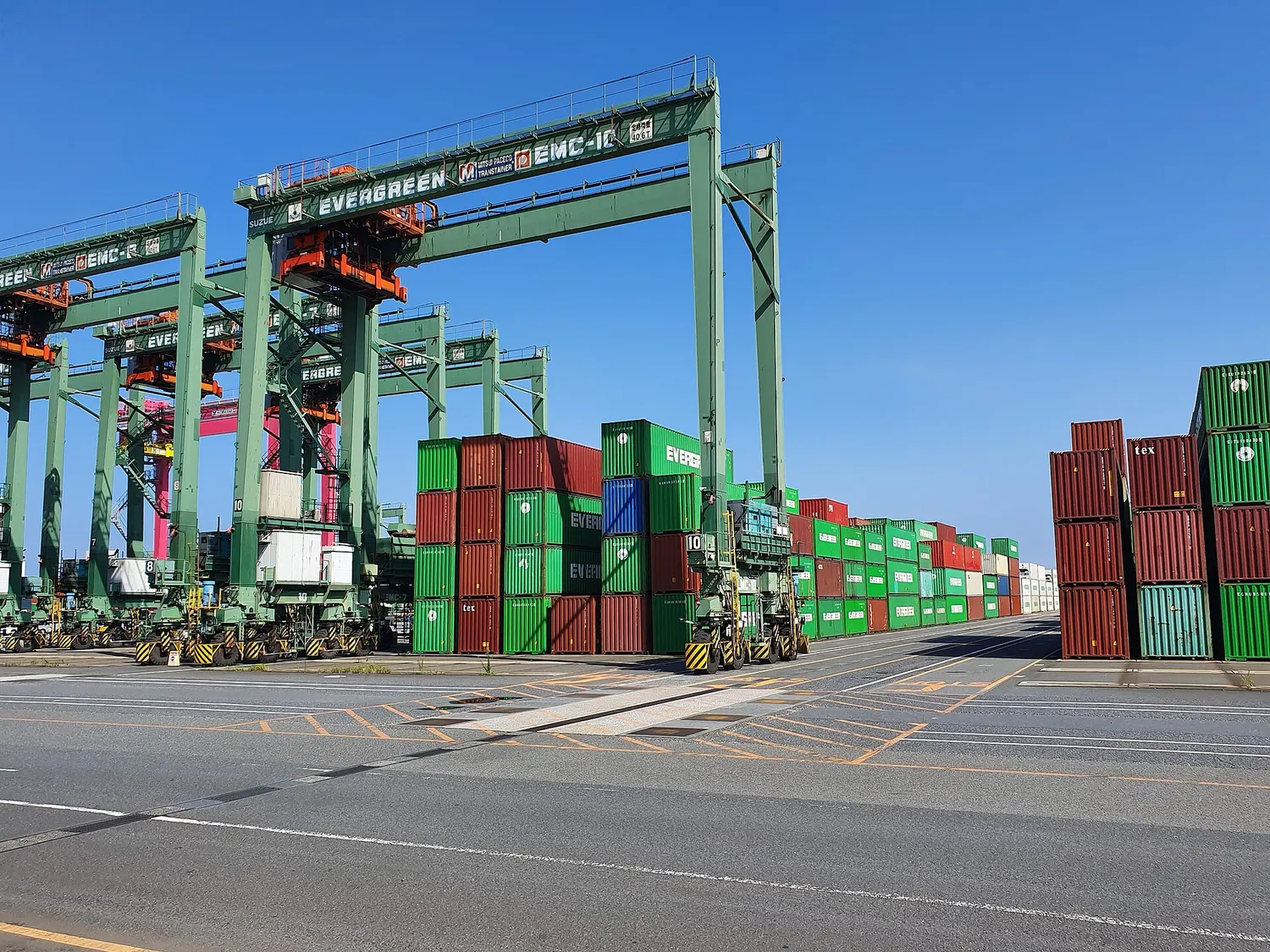
Bringing goods into Japan means a customs declaration, an import permission, and three kinds of charge, but the step that actually catches importers is none of those: it is the rule that customs will not release goods until every other-law permit is shown. A shipment can be correctly classified, its duty paid, and its paperwork in order, and still sit at the border because a permit from an entirely different ministry has not been obtained.
Imports run through the Customs Act (関税法), administered by Japan Customs (税関) under the Ministry of Finance. The mechanics, declaration, permission, and duty, are common to every shipment. What varies, and what determines whether importing a given product is easy or hard, is the web of other laws that customs enforces at the border on behalf of other regulators.
What follows maps the clearance process, the charges, how tariff rates and preferential origin work, and the other-law rule that sits at the centre of it. It is an orientation, not customs advice for a specific shipment.
The core mechanism: declaration and permission
Every import follows the same spine. The importer (or, in practice, a customs broker acting for them) files an import declaration (輸入申告) with Japan Customs, declaring what the goods are, their value, and their origin. Customs assesses the declaration and, once satisfied and once duty and tax are paid, grants import permission (輸入許可). Goods cannot be released from customs control until permission is granted.
This declare-and-permit cycle is one of the highest-volume procedures in the entire Japanese administrative system, processed electronically at enormous scale. For a routine, unrestricted shipment it is fast. The friction appears when the goods are subject to duty complexity, valuation questions, or, above all, other-law controls.
The three charges
Landed cost in Japan is built from up to three layers, and treating the duty as the whole picture is a common miscalculation:
- Customs duty (関税): calculated from the goods’ tariff classification and their customs value.
- Import consumption tax: levied on imported goods at the standard rate, with the reduced rate for qualifying items such as food. Crucially, it applies even when the duty rate is zero.
- National excise (内国消費税): additional taxes on specific goods, notably alcohol and tobacco.
The total is the sum of all applicable layers. A zero-tariff product still bears import consumption tax, so the duty rate alone never tells you the cost of importing.
How the duty rate is set: classification and origin
Two questions decide the duty rate, and both reward getting right.
What the goods are: classification. Every product is assigned a code in Japan’s tariff schedule, based on the international HS system, and that code sets the rate. Classification is technical and consequential: a defensible code is the difference between the correct duty and an expensive dispute, and borderline products can plausibly fall under more than one code with materially different rates.
Where the goods are from: preferential origin. Japan is party to a wide network of economic partnership agreements, the CPTPP, the Japan-EU agreement, RCEP, and others. Goods that qualify by origin under one of these can enter at reduced or zero preferential rates instead of the standard rate. But the preference is conditional: the goods must satisfy the agreement’s rules of origin, and origin must be properly documented. Claiming a preferential rate the origin cannot support is a frequent and costly error, and the documentation has to be right at the time of import.
The other-law rule: where clearance really turns
The feature that defines Japanese importing for most regulated products is the other-law requirement (他法令). Under the Customs Act, customs will not grant import permission for goods subject to other statutes until the importer proves that the permit, approval, notification, or certificate required by those laws has been obtained.
In practice this means customs sits at the end of a chain of other regulators:
- A food product needs its clearance under the Food Sanitation Act before customs will release it.
- A medical or pharmaceutical product needs its approval under the pharmaceutical law.
- A radio-equipped device needs its type certification under the Radio Act.
- Plants and animals and their products need quarantine clearance.
- Chemicals, cosmetics, and many other categories each carry their own gating approval.
For a large share of products, the real import barrier is not the tariff; it is the other-law permit. And because customs enforces it at the border, the permit has to be secured in advance, before the goods arrive, not scrambled for while a container sits in bond. Importers who plan only for duty and freight, and discover the other-law requirement at the port, are the ones whose shipments stall.
Brokers, trusted-trader status, and restricted goods
Import declarations are almost always prepared by a licensed customs broker (通関業者), whose registered specialists (通関士) handle classification, valuation, and filing through the electronic system. Using one is not strictly mandatory, but the technicality of the requirements makes it the norm. High-volume, compliant importers can also seek Authorized Economic Operator status for streamlined, expedited clearance.
Separately, some goods are simply prohibited (narcotics, certain weapons, counterfeit and IP-infringing goods), and customs enforces actively at the border, including on intellectual-property infringement. Others are restricted, importable only with specific approvals or under trade-control rules. Confirming goods are neither prohibited nor restricted is the basic first check, before anything ships.
Where this becomes a public affairs question
Most of importing is logistics and compliance: brokers, freight forwarders, and trade-compliance teams handle declaration, classification, and clearance, and they do it well. That part is not where Gemini Group’s work sits.
Two things pull importing toward policy. The first is the other-law layer: for a regulated product, the hard part of importing is the sector approval that gates clearance, and securing that approval, and engaging the regulator that grants it, is a regulatory and, where the rules are developing, a policy matter. The second is the trade-policy layer itself: tariff rates, preferential-origin rules, and the scope of Japan’s economic partnership agreements are not fixed. They are set through trade policy and negotiation, and a business whose economics depend on a particular duty rate or a particular EPA has a stake in how that policy moves. For most importers customs is a solved logistics problem; for a business whose product is gated by another law, or whose margin depends on a trade rule, it is downstream of policy that can be engaged.
If your import into Japan turns on a sector approval or a trade rule, get in touch.
How to plan it
- Calculate all three charges. Duty, import consumption tax, and any excise. A zero-tariff product still bears consumption tax.
- Get the classification right. The tariff code sets the duty; a defensible classification is worth the effort up front.
- Substantiate preferential origin before claiming it. EPA rates need the rules of origin met and documented at import, not asserted after.
- Secure the other-law permits first. For regulated products, the sector approval, not the tariff, is the real barrier, and customs enforces it at the border. Obtain it before the goods ship.
- Use a broker, and consider AEO at volume. Classification, valuation, and other-law requirements are technical; trusted-trader status speeds regular, compliant flows.
Why this matters for public affairs in Japan
Customs looks like the most purely administrative step in reaching the Japanese market: declare, pay, clear. For an unregulated commodity, it largely is. But for most products of any complexity, the border is where the rest of Japan’s regulatory system is enforced. The tariff is a number; the other-law permit is a project, and it belongs to a ministry with its own rules and its own direction of travel. Layered on top, the duty rates and origin rules that decide an importer’s economics are themselves the output of trade policy that shifts with each new agreement. A business that treats importing as freight and paperwork has seen only the surface. The companies that import successfully at scale are the ones that understood, early, that clearance is gated by regulation and priced by trade policy, and engaged both.
Gemini Group helps companies importing into Japan navigate the sector approvals that gate customs clearance and the trade and regulatory policy that shapes their market. Contact us to discuss your Japan import position, and ask about a custom report scoped to your product and its regulatory chain.
Further reading: our guides to importing food into Japan, bringing medical devices and pharmaceuticals to market, and radio type approval (giteki) each cover an other-law approval that gates customs clearance.
Frequently asked questions
- What do you need to import goods into Japan?
- Three things have to line up. First, an import declaration (輸入申告) to Japan Customs under the Customs Act, followed by import permission (輸入許可), without which the goods cannot be released. Second, payment of the applicable charges: customs duty, import consumption tax, and any excise. Third, and the step importers most often underestimate, satisfaction of any other-law controls (他法令): customs will not grant permission until the permits, approvals, or certificates required by other statutes, food, pharmaceuticals, radio equipment, quarantine, and so on, have been shown. Clearance requires all three, and the third is frequently the binding constraint.
- What taxes and duties apply to imports into Japan?
- Typically three layers. Customs duty (関税), calculated from the goods' tariff classification and their customs value. Import consumption tax, levied on imported goods at the standard rate (with the reduced rate for qualifying items such as food). And, for specific goods, national excise taxes (内国消費税), notably on alcohol and tobacco. The total landed cost is the sum of these, not the duty alone, and consumption tax on imports applies even where the duty rate is zero, so it should never be left out of the calculation.
- How are customs duty rates determined in Japan?
- By two things: what the goods are and where they are from. What they are is decided by tariff classification, assigning the goods an HS-based code in Japan's tariff schedule, which sets the rate; classification is technical and consequential, because the code determines the duty. Where they are from matters because of preferential rates: under Japan's economic partnership agreements (such as the CPTPP, the Japan-EU agreement, and RCEP), goods that qualify by origin can enter at reduced or zero preferential rates, but only if the rules of origin are met and origin is properly documented. Claiming a preferential rate you cannot substantiate is a common and costly error.
- What is the other-law (他法令) requirement in Japanese customs?
- It is the rule that customs clearance is gated on compliance with other statutes. Under the Customs Act, customs will not grant import permission for goods subject to other laws until the importer proves the required permit, approval, notification, or certificate under those laws has been obtained. So a food product needs its food-sanitation clearance, a medical product its pharmaceutical approval, a radio device its type certification, a plant or animal product its quarantine clearance, before customs will release it. For many products the real import barrier is not the tariff; it is the other-law permit, and it has to be secured before the goods reach the border, not after.
- Do you need a customs broker to import into Japan?
- In practice, almost always. Import declarations are normally prepared and filed by a licensed customs broker (通関業者), whose registered customs specialists (通関士) handle classification, valuation, and the declaration through the electronic customs system. It is not strictly mandatory to use one, but the classification, valuation, and other-law requirements are technical enough that most importers rely on a broker. Companies with high, regular volumes can also pursue Authorized Economic Operator status for streamlined, expedited clearance.
- What goods are restricted or prohibited from import into Japan?
- The Customs Act prohibits certain imports outright, including narcotics, certain weapons, counterfeit and intellectual-property-infringing goods, and child pornography, and customs actively enforces at the border, including on IP infringement. Beyond outright prohibition, many goods are restricted and importable only with the right approvals under other laws or trade-control regulations, from endangered-species products under CITES to items under import trade control. Confirming that goods are neither prohibited nor caught by a restriction, before shipping, is a basic first check.