The National Diet of Japan: How Japan's Legislature Works
The National Diet of Japan is the country's legislature and parliament: a 465-seat House of Representatives and a 248-seat House of Councillors. How it works, what a Diet member does, how a bill becomes law, and how its sessions set the calendar for every company operating in Japan.
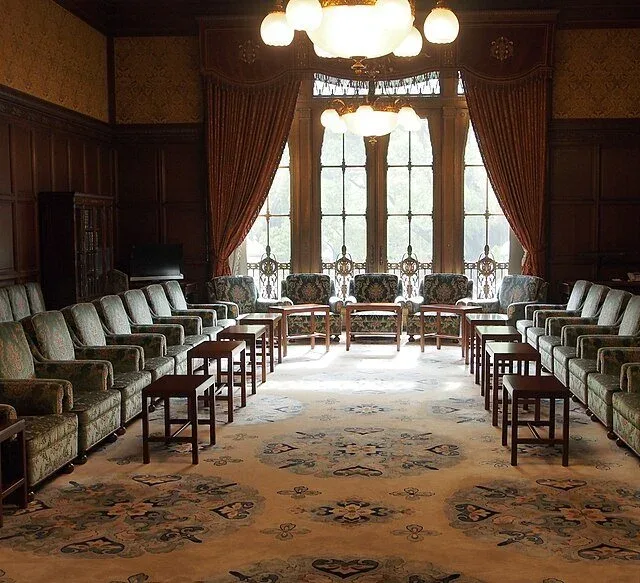
Yes, the Diet is Japan’s legislative body. Formally the National Diet (国会, Kokkai), it is the country’s parliament and, under Article 41 of the Constitution, “the highest organ of state power” and “the sole law-making organ of the State.” It is bicameral: a 465-seat House of Representatives (衆議院) and a 248-seat House of Councillors (参議院), both directly elected.
That makes the Diet the only body in Japan that can enact a statute. The Cabinet drafts most legislation and the ministries write it, but nothing becomes law until the Diet passes it.
Despite its name, the National Diet has nothing to do with rice and miso soup; it is Japan’s national legislature, in other words, its parliament. Understanding how the Diet is structured and how it makes decisions is essential for anyone working in government affairs or public policy, as well as anyone who wants to follow Japanese politics with confidence.
The present National Diet was born on May 20, 1947, when its first session was convened mere weeks after the Constitution went into effect. With its first session, the National Diet replaced the Imperial Diet created in 1890 under the Meiji Constitution.
The powers of the Diet include:
-
Enactment of laws.
-
Approval of the budget and other matters of national finances.
-
Approval of international treaties.
-
Designation of the Prime Minister.
-
Initiation of amendments to the Constitution.
Structure of the Japanese government
The three branches of the Japanese government structure include the Diet as the legislative branch, the executive branch represented by the Cabinet, and the Judiciary as, you guessed it, the judicial branch. This triumvirate of governance follows the principle of the separation of powers, where each branch limits the reach of the others through a system of checks and balances.
For the Diet in particular, this counterbalancing means that:
-
The Diet designates the Prime Minister and can pass a no-confidence motion against the Cabinet but the Prime Minister can dissolve the House of Representatives (the lower house of the Diet).
-
The Diet can dismiss judges but the Diet is subject to judicial review by the courts, with the Supreme Court holding the ultimate authority to determine the constitutionality of laws passed by the Diet.
-
The Diet ultimately answers to the People, the holders of sovereign power, who elect its members.
Structure of the Diet
The Diet consists of two Houses, the House of Representatives (the lower house) and the House of Councillors (the upper house).
Both houses share most structural systems, such as:
-
Plenary sittings, where all members assemble to discuss and vote.
-
Standing committees, a total of 17 in each house, which examine bills, budgets, treaties, petitions, and other matters within their jurisdiction.
-
Special committees, which look at matters the house decides need examination or those not under the jurisdiction of any standing committee.
The House of Councillors has an additional exclusive organ: research committees which carry out long-term, comprehensive studies of particular issues concerning public affairs and propose legislation to address them.
The Diet as a whole also has the Judge Indictment Committee to institute removal proceedings against judges, and the Judge Impeachment Court to try those judges, key tools in lawmakers’ oversight of the Judiciary.
The two houses compared
-
Number of members
-
House of Representatives: 465
-
House of Councillors: 248
-
-
Term of office
-
House of Representatives: 4 years, but membership ends if the house is dissolved.
-
House of Councillors: 6 years, with half the members elected every third year.
-
-
Right to vote
- Both houses: Citizens 18 years of age or older.
-
Right to stand for office
-
House of Representatives: Citizens 25 years of age or older.
-
House of Councillors: Citizens 30 years of age or older.
-
-
Constituency
-
House of Representatives:
-
Single-seat constituency: 289
-
Proportional representation: 176
-
-
House of Councillors:
-
Plural-seat prefectural constituency: 148
-
Proportional representation: 100
-
-
-
Dissolution
-
House of Representatives: Possible, at the discretion of the Prime Minister.
-
House of Councillors: Not possible.
-
If the House of Representatives and the House of Councillors make opposite decisions regarding a legislative bill or other measures, the Constitution recognizes the precedence of the House of Representatives over the House of Councillors.
The House of Representatives enjoys supremacy in the following cases:
-
Nomination of the Prime Minister.
-
Laws related to the national budget.
-
Approval of treaties.
In addition, only the House of Representatives can pass a vote of no-confidence against the Cabinet.
For bills unrelated to the budget, treaties, or the nomination of the Prime Minister, the House of Representatives can override the House of Councillors with a two-thirds majority.
While the House of Representatives is indeed more powerful, its members are constantly under threat of losing their seat if the house is dissolved, which can happen at any time at the discretion of the Cabinet. On the other hand, members of the House of Councillors serve six-year terms without interruption, affording them job security to act as a chamber of sober second thought.
The Diet’s schedule and sessions
The National Diet is convened by the Cabinet’s decision and follows three types of sessions.
At the beginning of each Diet session an opening ceremony is held with the Emperor in attendance. The Prime Minister gives an overall policy speech, followed by addresses on individual policy areas such as foreign affairs and finance by the respective ministers. Questions in response to those policy speeches are then presented on the floor by each political group in the house.
An ordinary session is convened once a year in January and lasts for 150 days with one possible extension, in order to consider the national budget and related bills for the following fiscal year.
Deliberations on the budget take place in the House of Representatives for approximately one month, and then in the House of Councillors for another month. The Diet simultaneously works on other pieces of proposed legislation during this time, with the budget having constitutional priority and specific procedural rules.
An extraordinary session can be convened under certain circumstances:
-
When deemed necessary by the Cabinet.
-
When requested by one-quarter or more of the total members of either house.
-
After a general election is called due to the expiration of the term of office of the members of the House of Representatives, or after a regular election of the House of Councillors.
In practice, extraordinary sessions are common in the autumn in order to consider matters such as supplementary budgets.
A special session can be convened after a general election is called when the House of Representatives is dissolved.
The length of an extraordinary session or a special session is determined by the agreement of both houses and can be extended for up to two times.
Why the Diet matters for companies operating in Japan
For a business, the Diet calendar is a deadline calendar. Most bills that affect a company’s licence to operate are drafted by a ministry, refined in an advisory council, and then introduced in the ordinary session that opens each January. By the time a bill is in committee, its shape is largely set. The window to influence it is earlier, in the council stage and in the ministry’s drafting, which is why understanding the Diet’s rhythm is the first step in any Japan public affairs strategy. Our guide to the Japan policy calendar sets out when each window opens, and how Japanese policymaking works explains the stages before a bill reaches the floor.
Conclusion
Understanding how the Diet functions is essential for anyone seeking to navigate Japanese policymaking. The interplay between its two houses, the unique checks and balances, and the rhythm of its annual sessions shape everything from legislation to leadership. For professionals in government relations, or anyone tracking Japan’s political landscape, mastering these fundamentals provides the foundation needed to anticipate change and engage effectively.
If you found this overview useful and want more regular insights into Japan’s politics and public policy, sign up to our mailing list and stay ahead of the developments shaping Japan’s future.
Frequently asked questions
- What is the National Diet of Japan?
- The National Diet (国会) is Japan's national legislature and parliament. Under Article 41 of the Constitution it is the highest organ of state power and the sole law-making body. It has two directly elected houses: the 465-seat House of Representatives and the 248-seat House of Councillors.
- What is a Diet member in Japan?
- A Diet member (国会議員) is an elected member of either house of the National Diet. Members of the House of Representatives serve four-year terms that can be cut short by dissolution; members of the House of Councillors serve fixed six-year terms, with half elected every three years.
- Is the Japanese Diet the same as a parliament?
- Yes. 'Diet' is the English name for Japan's parliament, inherited from the Imperial Diet of 1890. It does what a parliament or congress does: passes laws, approves the budget and treaties, and chooses the Prime Minister.
- Is the Diet a legislative body?
- Yes. The National Diet is Japan's legislature, equivalent to a parliament or congress. Article 41 of the Constitution designates it "the highest organ of state power" and "the sole law-making organ of the State," meaning no statute can be enacted in Japan without passing the Diet.
- What is Japan's national legislature called?
- It is called the National Diet, written 国会 (Kokkai) in Japanese. The English name comes from the German Reichstag-era term Diet, adopted when Japan modelled its first parliament on the Prussian system in 1889.
- Is the Japanese Diet bicameral?
- Yes. The Diet has two chambers: the House of Representatives (衆議院) with 465 seats and four-year terms, and the House of Councillors (参議院) with 248 seats and six-year terms. The House of Representatives can be dissolved at any time; the House of Councillors cannot.
- What does a Diet member do?
- Diet members debate and vote on legislation, approve the national budget and treaties, designate the Prime Minister, scrutinise the Cabinet through committee questioning, and may initiate constitutional amendments. Most legislation they vote on originates as Cabinet bills drafted inside the ministries.
- Who has more power, the House of Representatives or the House of Councillors?
- The House of Representatives. If the two chambers disagree, the lower house prevails on the budget, treaties and designating the Prime Minister after a set waiting period, and it can override the House of Councillors on ordinary legislation with a two-thirds majority.