Drug Pricing in Japan: How the NHI Price (薬価) Is Set, and Then Cut
Approval gets a drug into Japan; the NHI price decides whether the market is worth having. Japan sets one reimbursement price per drug, calculates it by comparator or cost, adjusts it against foreign prices, and then revises it downward every year for the life of the product. A map of how the number is set, why it only falls, and where the rules are actually decided.
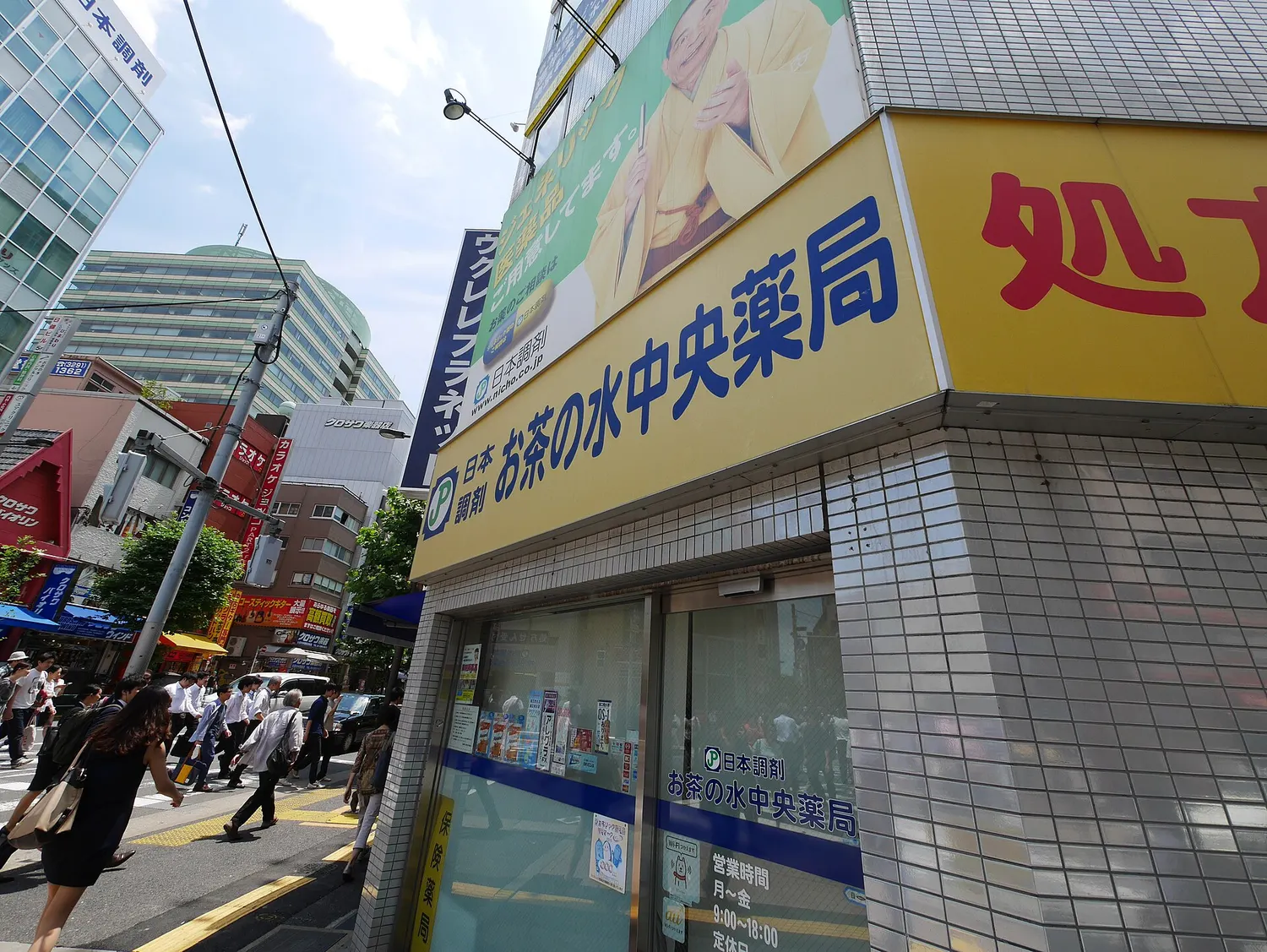
In Japan, approval is the first gate and the price is the second, and the second decides whether the market is worth having. A drug can clear the Pharmaceuticals and Medical Devices Agency, be granted coverage, and still fail commercially because of the price the public insurance system assigns it, a price the manufacturer does not set and cannot appeal in any ordinary sense.
Japan runs a single-payer-style pricing system layered on universal insurance: almost every reimbursed prescription drug carries one official price, the NHI drug price (薬価), and that price is calculated by rule, adjusted against foreign markets, and then revised downward every year for the life of the product. For a foreign pharmaceutical company, understanding how the number is set, and where the rules that set it are decided, matters as much as the approval itself.
What follows is a map of the mechanism: how a launch price is calculated, why it only falls, the clawbacks that catch commercial success, and the point at which pricing stops being a submission and becomes a policy question. It is an orientation, not pricing advice for a specific product, which is precisely the work that has to be done properly.
One drug, one price: the NHI Drug Price Standard
The foundation is the NHI Drug Price Standard (薬価基準). To be reimbursed under Japan’s public insurance, a drug must be listed on it with an official price, and that price is what the system pays, nationwide, regardless of what the manufacturer would prefer to charge. There is no separate negotiated price by payer, because there is effectively one payer regime.
New drugs are listed on a fixed cadence, generally four times a year, within roughly sixty and no later than ninety days of approval. So the pricing decision follows hard on the approval decision, and a company that treats price as a problem for after launch has already missed the point at which the number was set.
How a launch price is calculated: two methods
Every new drug’s price is built one of two ways, and which one applies is the first fork.
Comparator method (類似薬効比較方式). If there is an existing drug with a comparable indication and mechanism, the new drug is priced against it: its daily-treatment cost is aligned to that comparator. This is the common path, and the choice of comparator matters enormously, because it sets the baseline everything else adjusts.
Cost-calculation method (原価計算方式). If there is no suitable comparator, the price is built from the ground up: manufacturing cost, distribution, research and development, and an operating margin. The margin itself can be adjusted by how innovative the product is and, importantly, by how transparently the company discloses its cost structure. A cost build is harder to defend and more exposed, which is why the presence or absence of a good comparator shapes the whole strategy.
The premiums that move the number
On the comparator method, the baseline is then adjusted by a set of defined premiums (補正加算), each rewarding a specific kind of value:
| Premium | Japanese | Rewards |
|---|---|---|
| Breakthrough | 画期性加算 | genuinely novel mechanism and clear clinical superiority |
| Usefulness | 有用性加算 | improved efficacy, safety, or treatment convenience |
| Marketability | 市場性加算 | orphan and small-market indications |
| Pediatric | 小児加算 | pediatric indication and dosing |
| Sakigake | 先駆加算 | drugs designated for early launch in Japan |
| Specified-use | 特定用途加算 | defined unmet-need uses |
These are the levers that turn a comparator baseline into a premium launch price, and qualifying for them is an evidentiary case made to the Drug Pricing Organization (薬価算定組織), the body that calculates each product’s price. Building that case, what the comparator should be, which premiums the data supports, is the substance of getting a defensible launch price.
The foreign average price adjustment
Whatever the calculation produces, it is then bounded by the foreign average price adjustment (外国平均価格調整): the Japanese price is compared to the average of the drug’s list prices in the United States, United Kingdom, Germany, and France. Sit far above that average and the Japanese price is pulled down toward it; sit far below and it is pulled up.
The practical consequence is that a company’s pricing in the major reference markets feeds directly into what it can obtain in Japan, and the sequence in which a product launches globally is a Japan-pricing decision, not only a commercial one.
Why the price only falls: annual revision
The defining feature of the Japanese system is what happens after launch. Prices are revised through the market price survey (薬価調査), which measures the actual transaction prices at which drugs change hands between makers, wholesalers, and dispensers. Because those real prices sit below the official price, the revision pulls the official price down toward them.
Historically this happened every two years, alongside the medical fee schedule revision. Since 2021 it happens every year (毎年改定). The result is a one-directional revenue curve: over a product’s life, absent a specific protection, the NHI price only falls. Any Japan business case built on the launch price, rather than on the price trajectory the revision rules produce, is built on the wrong number.
The clawbacks that catch success
Commercial success triggers its own price cuts. Market-expansion re-pricing (市場拡大再算定) cuts the price of a drug whose actual sales substantially exceed the forecast used when it was listed, and a special rule bites harder on genuine blockbusters. There are parallel re-pricing rules when a drug gains new indications or changes its usage.
The logic is deliberate: the system recovers budget from drugs that grow beyond expectation. For a manufacturer it means a successful launch can be penalized precisely for succeeding, and the sales forecast filed at listing has long-tail pricing consequences that reward being realistic rather than optimistic.
The premium that holds the line, and why it is fought over
Against that downward pressure sits the Price Maintenance Premium (新薬創出・適応外薬解消等促進加算), the “new drug creation premium.” For a qualifying drug still under patent, it offsets the annual revision cuts, holding the price until a generic enters, at which point the accumulated premium is recovered.
Eligibility turns on product criteria and on company-level criteria that reward a demonstrated record of bringing innovation to Japan. This makes it the single most consequential lever in the system for an innovative manufacturer: it is the difference between a launch price that endures and one that erodes from year one. It is also the most contested, and its scope and its company requirements are renegotiated at revisions, which is why the innovative industry, and foreign manufacturers in particular, engage on it directly.
Cost-effectiveness: a second look at the price
Since 2019 Japan has run a formal cost-effectiveness assessment (費用対効果評価) for a selected set of high-price, high-budget-impact products. It is important to be precise about what it does. Unlike England’s NICE, it does not decide coverage: coverage is already granted through listing. Instead it adjusts the price after listing, up or down, based on the incremental cost per quality-adjusted life year measured against defined thresholds. The analysis runs through the national public-health institute, and the outcome is decided through 中医協’s cost-effectiveness subcommittee.
It applies to relatively few products, but for a high-cost drug it is effectively a second pricing determination arriving after launch, and one that turns on health-economic evidence a company is far better preparing for in advance than reacting to.
Where this becomes a public affairs question
Everything above divides cleanly into two kinds of work, and conflating them is the common mistake.
The first is getting the best price for a specific product: the comparator argument, the premium case, the cost submission, the health-economic dossier. That is a regulatory and pricing exercise, made to the Drug Pricing Organization, and pricing specialists and regulatory teams do it.
The second is the rules themselves: how often prices are revised, how the maintenance premium is scoped and who qualifies for it, which products fall into cost-effectiveness assessment, how the re-pricing clawbacks are calibrated, how generics and long-listed products are treated. None of those is fixed. They are set and reset through 中医協, its drug-pricing subcommittee, and the wider health-policy process, and each revision is a negotiation in which the innovative industry, the payers, and the providers all press their case. A company whose entire Japan revenue model depends on those rules has a legitimate interest in how they develop, and that interest is pursued through the policy process, not the product submission.
If your Japan business turns on how the pricing rules develop, get in touch.
How to plan it
- Treat price as part of the launch, not after it. Listing follows approval within about two to three months; the pricing case has to be built well before then.
- Win or lose it on the comparator. Where a comparator exists, the choice of comparator sets the baseline everything else adjusts. Where one does not, the cost build is more exposed.
- Model the price trajectory, not the launch price. Annual revision and the re-pricing clawbacks shape the whole revenue curve. The launch number is the high point.
- Understand the maintenance premium before you rely on it. Whether your product and your company qualify decides whether the launch price endures or erodes.
- Prepare for cost-effectiveness assessment if you are high-cost. For a high-price product the health-economic case is a second pricing determination; prepare it early.
- Separate the product submission from the rules. The best price for your drug is a submission; the shape of the rules is a policy question decided at 中医協, and the two are engaged differently.
Why this matters for public affairs in Japan
Drug pricing looks like the most technical, most settled part of entering Japan, a formula applied by a committee. For any single product, that is largely how it feels. But the formula is not fixed. The revision cadence, the premium that protects innovation, the scope of cost-effectiveness assessment, the treatment of long-listed products, and the clawbacks on success are all live policy, revisited on a regular cycle and pushed in opposite directions by payers under fiscal pressure and an industry defending the return on innovation. For a manufacturer whose Japan business case rests on those parameters, the price is downstream of policy that can be understood, tracked, and engaged. Knowing the difference between arguing your product’s price and shaping the rules that govern all prices is what separates a company that accepts the number it is given from one that has a voice in how the number is decided.
Gemini Group advises pharmaceutical and medical-technology companies on the health-policy and pricing environment in Japan, on 中医協 and the reimbursement process, and on the public affairs strategy around it. Contact us to discuss your Japan pricing and policy position.
Further reading: our guide to bringing medical devices and pharmaceuticals to market in Japan covers the approval side, and our PMDA overview profiles the regulator that decides it.
Frequently asked questions
- How are drug prices set in Japan?
- Japan sets a single official reimbursement price for each prescription drug, the NHI drug price (薬価), listed on the NHI Drug Price Standard (薬価基準). A new drug's price is calculated one of two ways: by benchmarking it to an existing comparator drug with similar efficacy (類似薬効比較方式), or, where there is no suitable comparator, by building it up from cost (原価計算方式). The calculated price is then adjusted against the average of prices in the United States, United Kingdom, Germany, and France. The price is proposed by the Drug Pricing Organization and confirmed through the Central Social Insurance Medical Council (中医協). It is a regulated price, not one the manufacturer sets.
- Who decides drug prices in Japan?
- The price is set by the Minister of Health, Labour and Welfare on the advice of the Central Social Insurance Medical Council (中央社会保険医療協議会, or 中医協), a tripartite council of payers, providers, and public-interest members. Within it, the Drug Pricing Organization (薬価算定組織) calculates the price of each individual product, and the Drug Pricing Committee (薬価専門部会) sets the rules that govern how every price is calculated and revised. The rules, not just the individual prices, are decided there, which is what makes 中医協 the center of gravity for anyone whose Japan business depends on the price.
- How is the price of a new drug calculated in Japan?
- By one of two methods. If there is an existing drug with a comparable indication and mechanism, the new drug is priced by comparison (類似薬効比較方式): its daily-treatment cost is aligned to that comparator, then adjusted by premiums for innovation, usefulness, marketability, pediatric use, and the like. If there is no suitable comparator, the price is built by cost calculation (原価計算方式): manufacturing cost, distribution, research and development, and an operating margin, with the margin adjustable by how innovative and how transparent the submission is. Either result is then bounded by the foreign average price adjustment.
- What is the foreign average price adjustment?
- It is the rule (外国平均価格調整) that compares a new drug's calculated Japanese price to the average of its list prices in the United States, United Kingdom, Germany, and France. If the Japanese price would sit far above that foreign average, it is pulled down toward it; if far below, it is pulled up. It stops Japan's price from diverging too far from the major reference markets, and it means a company's pricing in those markets feeds directly into the number it can obtain in Japan.
- How often are drug prices revised in Japan?
- Every year. Historically prices were revised every two years alongside the medical fee schedule, but since 2021 Japan revises prices annually, using a survey of the actual transaction prices at which drugs change hands (薬価調査). Because those market prices sit below the official price, each revision ratchets the official price down. Over a product's life the NHI price moves in one direction: downward. Planning a Japan business on the launch price is a mistake; the whole revenue curve is shaped by the revision rules.
- What is the cost-effectiveness (HTA) system in Japan?
- Since 2019 Japan has run a formal cost-effectiveness assessment (費用対効果評価) for selected high-price, high-budget-impact drugs and devices. Unlike systems such as England's NICE, it does not decide whether a product is covered: coverage is already granted through listing. Instead the assessment adjusts the price after listing, up or down, based on the incremental cost per quality-adjusted life year against defined thresholds. The analysis is handled by the national institute (C2H) and the outcome is decided through 中医協's cost-effectiveness subcommittee. It applies to a small number of products, but for a high-cost drug it is a material second determination of the price.
- What is the new drug creation premium (新薬創出加算)?
- The Price Maintenance Premium (新薬創出・適応外薬解消等促進加算) is a mechanism that shields a qualifying new drug from the annual revision cuts while it is still on patent, effectively holding its price until a generic enters, at which point the accumulated premium is recovered. Eligibility turns on product criteria and on company-level criteria that reward a track record of innovation in Japan. It is one of the most consequential and most contested features of the system: it is what makes an innovative launch price durable rather than immediately eroding, and its scope and company requirements are renegotiated at revisions, which is exactly why innovative manufacturers engage on it.