The 13.9 Trillion Yen Question: What Was at Stake in Japan's Extraordinary Diet Session
Inside Japan's 13.9 trillion yen supplementary budget: what the extraordinary Diet session meant for public affairs, government relations, and corporate strategy in Japan.
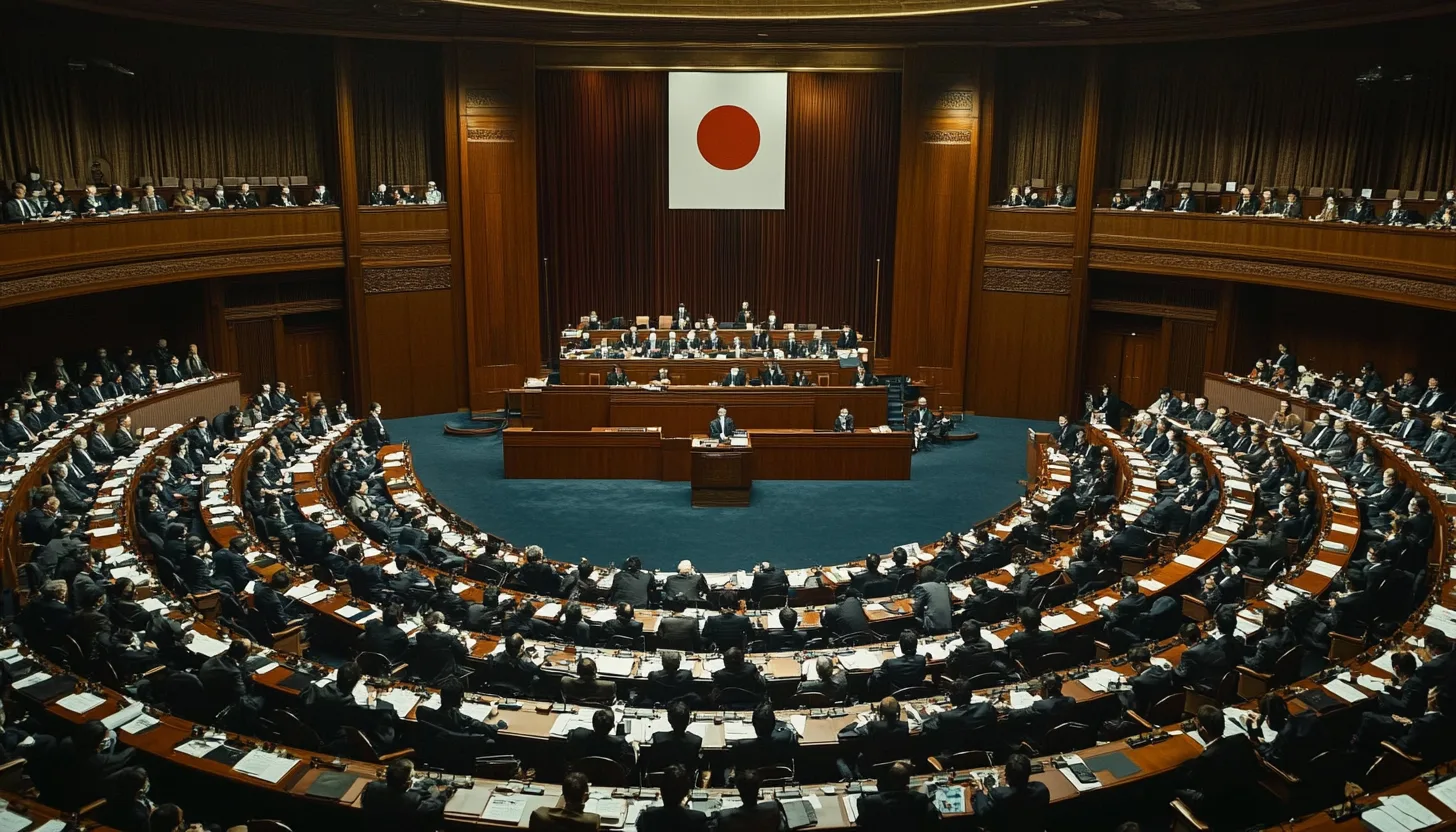
The extraordinary session of Japan’s Diet that ran from 28 November to 21 December 2024 was not an ordinary legislative cycle. A ruling coalition that had just lost its majority in the Lower House was forced to negotiate, line by line, with an opposition party it had previously ignored. The result was a 13.9 trillion yen supplementary budget that reshaped the political center of gravity heading into 2025 and set important precedents for how public policy in Japan is now brokered.
For corporate affairs teams, trade associations, and foreign investors, the session was a live case study in how government relations in Japan works when no single party can dictate terms. The dynamics seen in late 2024 have continued to define coalition politics through 2026.
Why this session mattered
The extraordinary Diet session convened shortly after the ruling Liberal Democratic Party (LDP) and its coalition partner Komeito lost their Lower House majority in the October 2024 general election. Prime Minister Shigeru Ishiba’s administration needed a supplementary budget to address inflation, energy costs, and earthquake recovery, but lacked the votes to pass it alone.
The LDP turned to the Democratic Party for the People (DPP) as a third “dancing partner,” ceding significant ground on income-tax policy in exchange for legislative cooperation. The arrangement set a template for policy-by-policy negotiation that has persisted into the Takaichi era.
Inside the 13.9 trillion yen supplementary budget
The FY2024 supplementary budget came in at roughly 13.9 trillion yen (about USD 90 billion at the time), with a total project scale, including private-sector spending, of approximately 39 trillion yen. It was larger than the previous year’s supplementary budget (13.2 trillion yen; total project scale of 37.4 trillion yen), and rested on three pillars.
Economic growth
Approximately 6 trillion yen was earmarked for R&D subsidies targeting semiconductors, AI, and other strategic sectors through FY2030. The package reinforced Japan’s industrial policy pivot toward economic security and supply-chain resilience, continuing the direction set under Kishida and Ishiba.
Addressing inflation
The budget funded electricity and gas subsidies from January to March 2025, along with one-off cash transfers of approximately 30,000 yen to low-income households and an additional 20,000 yen per child. Inflation relief remained the most politically salient element, and the opposition’s strongest leverage point.
Public safety and disaster recovery
A third pillar funded disaster prevention, mitigation, and recovery, including for communities affected by the 2024 Noto Peninsula earthquake. Infrastructure resilience had become a bipartisan priority following repeated seismic events.
The “1.03 million yen wall” and the DPP’s win
The headline policy concession was the DPP’s long-running demand to raise the 1.03 million yen income-tax threshold: the so-called wall that encourages part-time workers, particularly spouses, to cap their hours to preserve dependent status. The supplementary budget language formally opened the door to raising the threshold, though the exact figure and fiscal mechanics were left for further negotiation.
The DPP also pushed for relief on the provisional gasoline tax surcharge. A full overhaul of income-tax brackets required far more analysis than a four-week extraordinary session could deliver, but the direction of travel was set.
For public affairs practitioners, the lesson was clear: a small party with decisive votes can now extract policy wins the LDP would never have offered under a comfortable majority. Issue-by-issue coalition management has become a permanent feature of the landscape.
Fiscal risk and the FY2025 budget
The stimulus package exposed Japan’s familiar fiscal tension. The previous government had projected a budget surplus of roughly 0.8 billion yen, but expanded transfers paired with reduced income-tax revenue made that target difficult to defend. Deliberations on the FY2025 budget began in parallel, with the DPP pushing for temporary consumption-tax relief, a harder pill for an LDP wary of setting a precedent.
The Ministry of Finance and the LDP’s tax commission have since spent the better part of 2025 and 2026 managing the trade-offs opened up by this session. Expect continued pressure on the income-tax base, the gasoline surcharge, and social-insurance premiums through upcoming election cycles.
The opposition’s new playbook
The DPP’s outsized role did not mean the rest of the opposition was idle. The Constitutional Democratic Party of Japan (CDP) broadly supported revising the income-tax threshold but faced a strategic dilemma: push populist policies forward, or avoid being seen as a junior partner to the LDP ahead of the 2025 Upper House election. The CDP opted to lengthen floor debate rather than join back-room deals.
Nippon Ishin, by contrast, remained firmly opposed to working with the LDP, citing perceived broken promises on political reform. Its leadership change in December 2024 did not alter that stance.
Most consequentially, opposition parties for the first time chaired major Diet committees. Eight committee chairs went to non-LDP parties: five to the CDP, plus one each to Nippon Ishin, Komeito, and the DPP. The Budget Committee chairmanship, held by the CDP’s Jun Azumi, gave the opposition unprecedented power to set the pace, topics, and witnesses of budget scrutiny. That precedent has held.
What this meant for companies operating in Japan
The extraordinary session signalled a structural shift that corporate affairs and government relations teams in Japan now treat as the baseline.
- Policy is contestable again. Legislation that once sailed through the LDP’s internal processes can now be amended, delayed, or reshaped on the floor.
- Stakeholder maps must be broader. Engagement limited to the LDP and relevant ministry bureaus is no longer sufficient. The DPP, CDP, Komeito, and Ishin all have meaningful legislative leverage depending on the issue.
- Timing risk has risen. Supplementary budgets, tax reform, and regulatory bills are more likely to slip or be rewritten late, complicating commercial planning.
- Ministry-level work matters more, not less. With parties willing to horse-trade, the substantive technical work done inside METI, MHLW, MOF, and other ministries is often where the real terms of a policy are fixed.
Industries exposed to energy pricing, consumer subsidies, semiconductor support, and disaster-related procurement all had to recalibrate. Pharmaceutical, tech, and energy firms in particular watched how R&D envelopes were allocated because those line items drive multi-year procurement and partnership decisions.
Why this matters for public affairs in Japan
The November–December 2024 extraordinary Diet session was the moment at which coalition bargaining replaced one-party dominance as the organising principle of Japanese legislative politics. Everything from the FY2025 budget to the Takaichi cabinet’s current agenda flows from the precedents set during those four weeks.
For multinationals, trade associations, and policy-sensitive investors in Japan, the takeaway is operational, not philosophical. Single-channel government relations strategies (rely on one LDP Diet member, one bureau, one industry association) no longer absorb the full risk. Effective public affairs in Japan today means mapping influence across multiple parties, ministries, and committees simultaneously.
Gemini Group helps clients navigate exactly this environment: tracking policy development inside the ministries, identifying the right Diet members across parties, and building engagement plans that hold up when the political wind shifts. Contact us to discuss how your organisation can stay ahead of Japan’s evolving legislative dynamics.